Text written with AI assistance. Editorial responsibility: José Antonio Domínguez Carbonell. How we work.
Minami Lane: listen to your neighbours to build a better street
A ramen shop, a bookstore and homes filling with life. Minami Lane offers small-scale neighbourhood management: observe what its residents like and adjust the place for the following day.
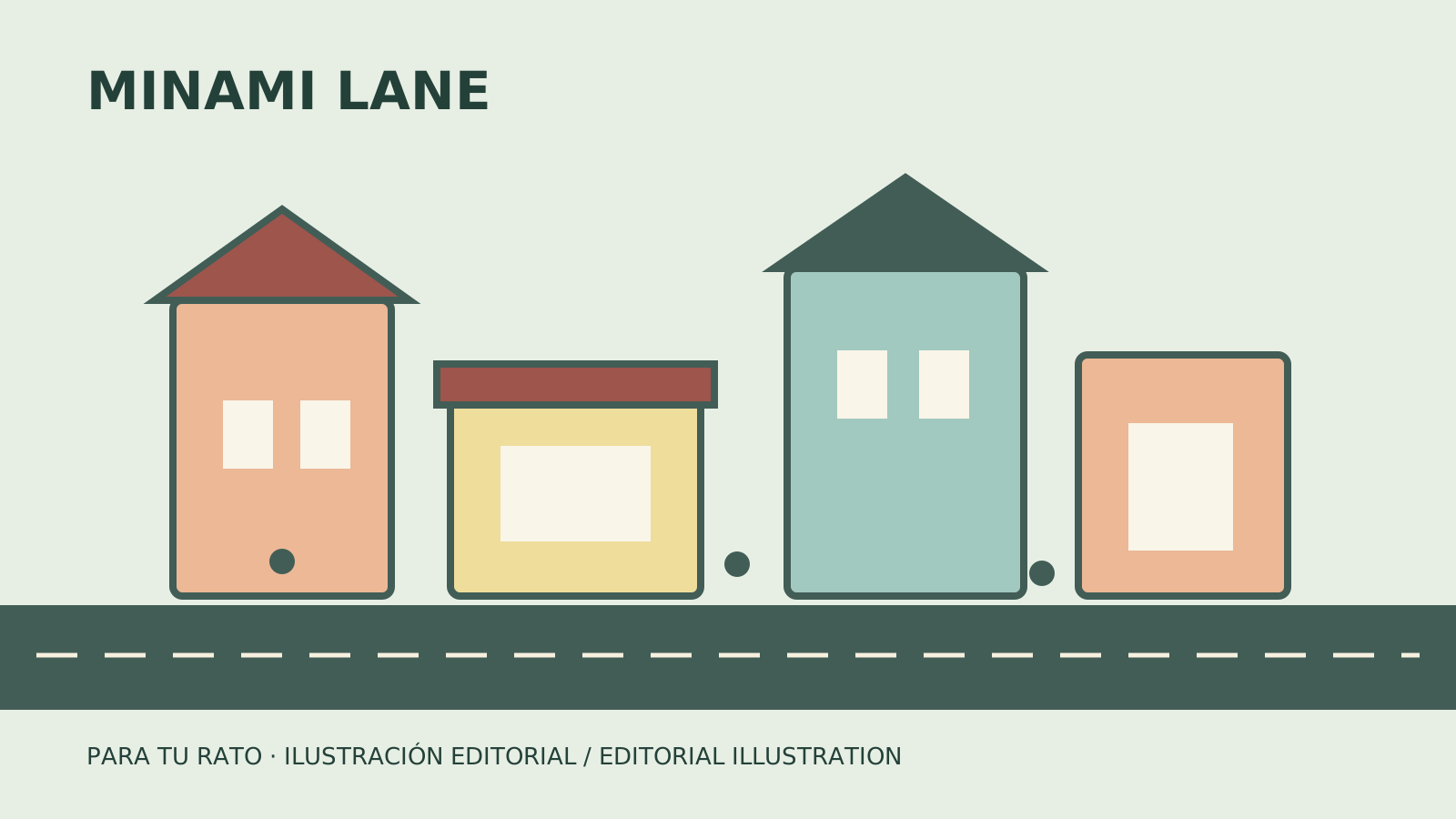
Original Para Tu Rato editorial illustration, created with AI assistance. Not a screenshot or official game artwork. The video shows the actual game.
Original Para Tu Rato editorial illustration, created with AI assistance. Not a screenshot or official game artwork. The video shows the actual game.
The next improvement begins on the pavement
Building a shop is only the beginning. In Minami Lane, neighbours walk along the street and tell you what they like and what they would change. That information returns with you to preparations for the following day: you can adjust a recipe, change a price or add something the neighbourhood lacks. Doot and Blibloop's game puts its main idea there, in making a small place work better for the people who use it. A street with homes, ramen, boba tea and bookstores can give you plenty to do without becoming a huge city to administer.[3][1]
Prepare first; observe afterwards
The day connects two moments: deciding what to change before it begins and watching how the neighbourhood responds once it starts. Shops let you adjust products and prices; homes bring residents to the street. Placing attractive buildings and forgetting about them is therefore not enough. Your plan needs to be checked against comments from the people who use the place. The official description also includes random events in missions: you need to work with what each day brings. The interest lies in that back-and-forth between a decision and its effects.[1][4]
Ramen is a management decision too
Consider a hypothetical example, rather than a specific quest: you have opened a shop, but customers' comments suggest its offering does not appeal to them. For the next day, you can review the recipe or price instead of immediately building another business. That possibility changes the scale of the problem. You are not organising a large metropolis's roads, but trying to understand why a shop on your street works the way it does. According to the team, managing inventories, recipes and prices is part of the proposal. The neighbourhood's beauty also contributes to residents' happiness; business and decoration meet in the same space.[3][4]
Complete a mission or design your neighbourhood?
There are two ways to approach the street. Missions set objectives and let you unlock new levels with more buildings and villager types. They give your changes a direction: you decide what to do while considering what that stage asks of you. Sandbox mode, by contrast, is presented as a space for creativity and relaxation without the pressure of those objectives. It is a useful difference before choosing: you might want to solve a small management problem, or prefer to focus on the street's appearance. Having a freeform mode does not turn the campaign into an endless city simulator.[4][1]
Small details fill the screen
Alongside the shops, there is litter to collect and cats that appear in the neighbourhood; the team also highlights its tanukis. These details of street life sit alongside management adjustments. Blibloop created the hand-drawn artwork and Zakku the music and soundscape. Nintendo's launch trailer shows how the neighbourhood moves and what its shops look like. See whether that scale appeals to you: the proposal focuses on caring for a place close at hand. Our header uses an original editorial illustration, identified as such; the video shows the actual game.[3][6]
A short proposal with a clear boundary
The team estimates two to four hours of play, guidance we have not measured ourselves. In GameSpew on 27 February 2024, Kim Snaith described accessible management and found the campaign brief; she cautioned against expecting the depth of a large city builder. Her review used a PC code supplied by the publisher. That perspective helps position the game: it may fit if you want a few small problems to solve, but adjust your expectations if you want a project that grows for weeks. The official description does not promise a succession of new levels after release either.[3][5]
Where to find it and what to check
Minami Lane arrived on Steam on 28 February 2024 and on Switch on 15 August that year: we present it as a discovery rather than a current launch. Steam Spain lists €4.99 for the base game when checked on 11 October 2026; the price may change. It lists Windows, macOS and Linux versions and Spanish text. Direct links to Steam, the team's itch.io page and Nintendo are in the sources, without affiliation. Check the edition and languages for your platform: PC information does not certify every console version.[1][3][4][2]
Sources and checks
Links point to sources. They are not endorsements or sponsorships.
- [1] Steam — Minami LaneStore · Checked on 11 October 2026
- [2] Steam — Minami Lane, consulta EspañaStore · Checked on 11 October 2026
- [3] Doot Tiny Games — Minami LaneDeveloper · Checked on 11 October 2026
- [4] Nintendo — Minami Lane para SwitchStore · Checked on 11 October 2026
- [5] GameSpew — Kim Snaith — 27/02/2024Third-party review · Checked on 11 October 2026
- [6] Nintendo of America — Minami Lane, tráiler de lanzamientoVideo · Checked on 11 October 2026
Revision history · Version 1
— First bilingual presentation with checked sources and an original illustration. Actual GPT/Gemini editorial collaboration; publication subject to exact-version review.
Corrections →Was this article useful?
Rate how clear and useful the explanation is, not the product or whether you agree with the news.
Public voting is currently unavailable. A verified shared voting service is in preparation.