Samsung and Gemini: asking without reaching for your phone
Intelligent Eyewear focuses on spoken answers without a display. A connection to the phone remains part of the proposition.
The answer reaches your ear
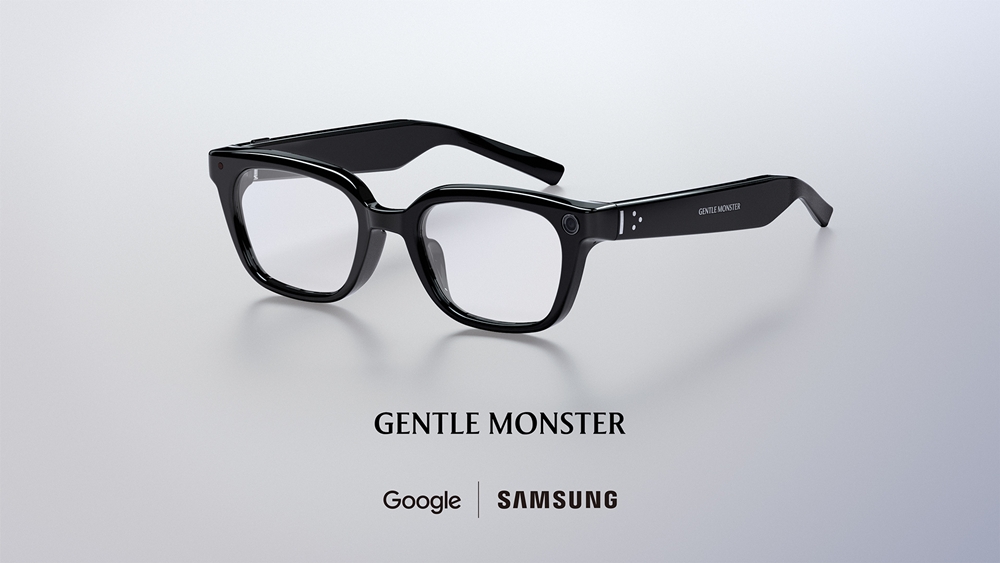
Samsung’s Intelligent Eyewear has no display: it answers through speakers and works with a connected Galaxy phone, according to Moon Joon-hyun of The Korea Herald. A Samsung spokesperson confirmed a November launch to the reporter. His story was published October 1, 2026, and updated the following day.[1]
Consider a hypothetical situation: you leave an unfamiliar station and encounter a sign you cannot understand. You would like to ask what it says without stopping to find an app. That small change of gesture is the hook: asking for help with what is in front of you while the phone stays put away.
In May, Google presented examples such as hearing a sign or menu translated and receiving directions. Gemini is invoked by voice or a tap on the temple. These are announced features for the glasses, not evidence that every translation will be right.[2]
The appeal lies in how close the question sits to what you are looking at. A brief direction might be enough where a screen full of options gets in the way. Usefulness will turn on small details: understanding the reply, being able to interrupt it and knowing when to return to the phone.
The glasses change the gesture; the phone stays
Android XR covers headsets, wired glasses and lightweight audio or display glasses. Display glasses add visual information; audio glasses respond through sound. Sharing a platform does not make all these devices the same product.[6]
In its May 19 announcement, Google put audio glasses first, with a plan for a fall release in the United States. That forecast alone does not provide a calendar for Spain or Europe as a whole.[2]
Samsung presented designs developed with Gentle Monster and Warby Parker in July. Features may require a compatible Galaxy, connectivity and particular apps or services; translation and navigation also vary by language and region.[3]
In an interview published by Samsung, James Choi explained that processing is split between the glasses and the connected Galaxy. The company presents them as phone companions.[4]
For someone who already carries a phone everywhere, that could fit: keep the tools and change how you reach them. Someone hoping to forget about the phone faces a different buying question. The device in the pocket remains part of the experience.
The person in front of you matters, too
Samsung says inner and outer lights indicate recording; removing the glasses or covering the outer indicator disables it. These are the safeguards described by the manufacturer.[4]
Android requires glasses-specific camera and microphone permissions, even when an app already has them on the phone. The dialog identifies the device receiving access. That technical permission belongs to the user; it does not establish consent from people who appear in a recording.[5]
That distinction changes the station scene. For the wearer, a camera could help frame the question. For someone facing it, knowing whether it is active matters. A light and a setting do not, on their own, answer every question that arises between two people.
In the hypothetical situation, the best reply would clarify the sign and let the journey continue. That is where part of the appeal will be decided: how much help fits into a few words in your ear, and how often you reach for the phone anyway.
Sources and checks
Company documentation details announcements and specifications, while reports, analyses, and user accounts provide external context. Multiple pages from one company do not represent independent verification, and external links do not constitute editorial endorsement.
- [1] Moon Joon-hyun: confirmación obtenida por The Korea HeraldConsulted source · Checked on 23 October 2026
Confirmation obtained by Moon, October 1–2.
- [2] Google I/O: edición alemana del anuncio de las gafas con GeminiOfficial source · Checked on 23 October 2026
Google’s May announcement.
- [3] Samsung: presentación y condiciones de Intelligent EyewearOfficial source · Checked on 23 October 2026
Announced designs and conditions.
- [4] James Choi: entrevista de Samsung sobre diseño y salvaguardasOfficial source · Checked on 23 October 2026
Samsung interview and image.
- [5] Android Developers: permisos específicos de cámara y micrófonoOfficial source · Checked on 23 October 2026
Camera and microphone permissions.
- [6] Android Developers: tipos de dispositivos XROfficial source · Checked on 23 October 2026
Android XR device classes.