Sferical One: a bank, a drug company and 1,152 shared GPUs
SEB is starting to use the Swedish system to find information and develop software. Sharing capacity does not mean mixing companies’ data.
What these companies share
AstraZeneca, Ericsson, Saab, SEB and Wallenberg Investments unveiled Sferical One on 15 October, with SKF as a strategic partner. The operator says it had been running since late summer. The idea brings together investment, machines and technical knowledge that each company can use for different purposes. The project spans drug exploration and industrial predictive maintenance: sharing infrastructure does not require building the same AI product.[1]
The bank provides a more familiar example
SEB describes selected tasks: finding information, analysing data and helping develop software using its own documentation. Each partner keeps its allocated computing capacity and data separate. The bank will gradually give more teams access and continue working with other suppliers. The change adds another tool to its operations, with closer control over where it runs; it does not move everything over at once.[2]
There is a structure behind those 1,152 GPUs
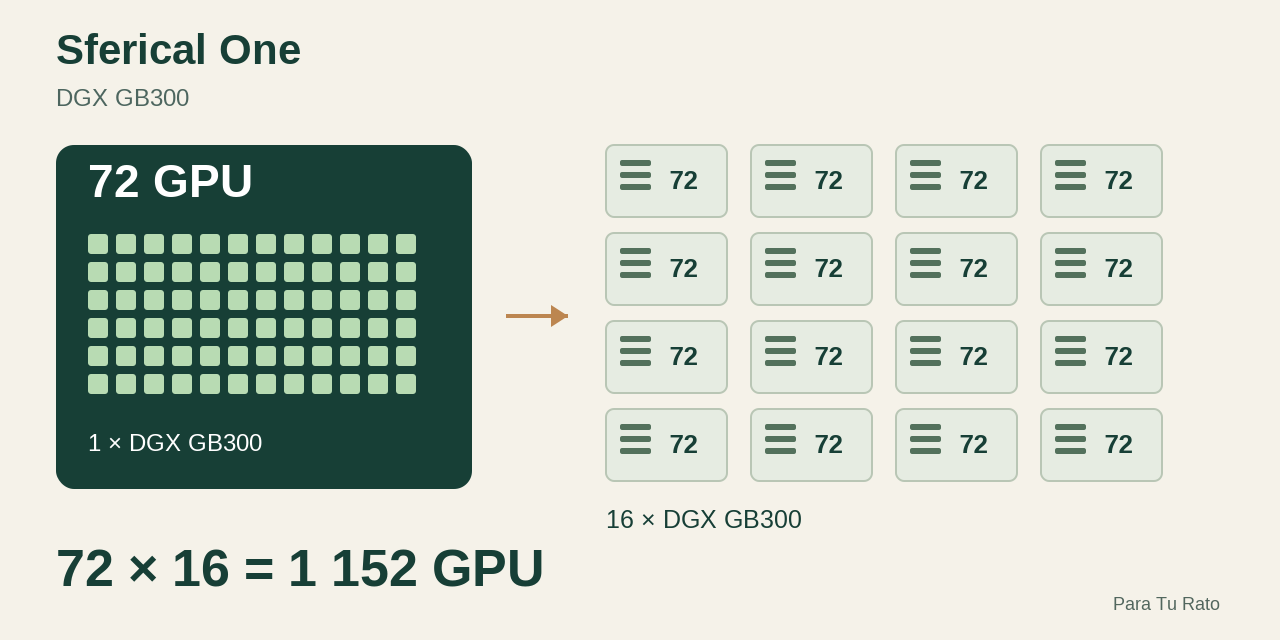
NVIDIA puts the deployment at two DGX SuperPODs and sixteen DGX GB300 systems. The figure becomes easier to understand as a collection of machines whose resources need coordination. It does not mean every company receives sixteen racks or that all partners simultaneously have the entire system at their disposal. Allocation is part of the shared model the bank describes.[3]
Why a rack is more than one giant GPU
The DGX GB300 specification lists 72 Blackwell Ultra GPUs, 36 Grace CPUs and liquid cooling. NVLink connects accelerators within that architecture; network interfaces also provide links between systems. Multiplying 72 by 16 checks the announced inventory. It does not calculate how long a bank search or a particular training run will take: the model, data, memory requirements and division of work matter too.[4]
Telecoms has a different task
Ericsson places its current involvement in AI-based network operations, seeking security and reliability. Its vision of linking AI and 6G looks ahead; it does not describe a 6G service this launch already puts in the public’s hands. That distinction helps readers place the news: there is infrastructure in use and companies beginning to apply it, rather than a new app we can download. The shared machine will have to serve very different needs.[5]
Sources and checks
Company documentation details announcements and specifications, while reports, analyses, and user accounts provide external context. Multiple pages from one company do not represent independent verification, and external links do not constitute editorial endorsement.
- [1] Sferical AI — anuncio del 15 de octubre y ámbitos de trabajoOfficial source · Checked on 18 October 2026
- [2] SEB — primeros usos y separación de capacidad y datosOfficial source · Checked on 18 October 2026
- [3] NVIDIA — configuración anunciada de Sferical OneOfficial source · Checked on 18 October 2026
- [4] NVIDIA — especificaciones técnicas del DGX GB300Official source · Checked on 18 October 2026
- [5] Ericsson — uso en redes y visión futura de 6GOfficial source · Checked on 18 October 2026