The 24 GB RTX 5080 rumour: eight extra gigabytes with room to do more
The possible 2027 revision has an appeal beyond higher frame rates: more room for the things you enjoy doing with your PC.
An RTX 5080 with more headroom
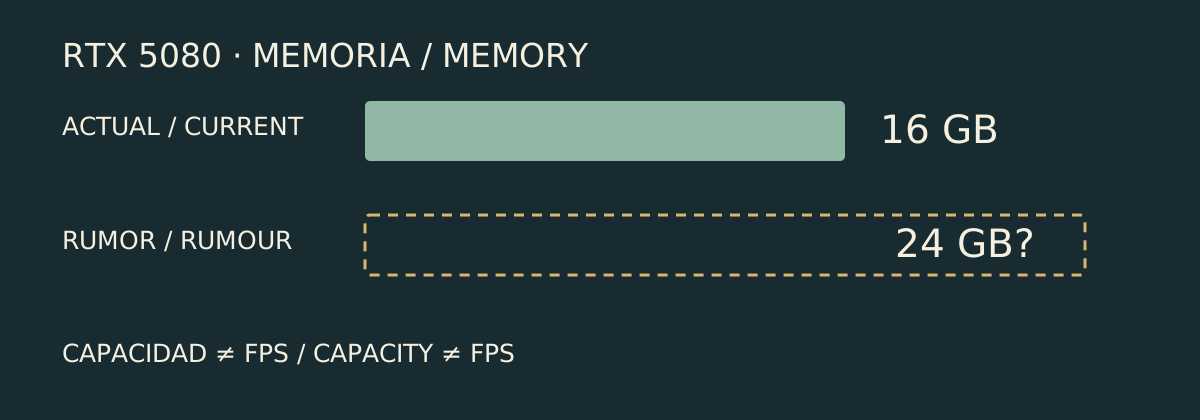
A 24 GB RTX 5080 could arrive in the first quarter of 2027. That is what BenchLife reports in a piece by Chris.L dated 10 October, while NVIDIA still lists the 16 GB model in its Spanish catalogue. One detail makes the rumour worth a closer look: those extra eight gigabytes could help with gaming, building a Blender scene or running local AI. On a PC used for several things, memory can offer a very tangible improvement: being able to carry on with what you were doing.[1][2]
That is the appeal of the proposal. A graphics card matters for the games it runs, but also for the projects it lets you pursue. If you enjoy trying tools, building 3D worlds or exploring language models, you may see those 24 GB differently from someone seeking more speed in a favourite game. This is a chance to understand what each specification actually offers. A simple distinction helps: having more space and working faster are benefits that sometimes go together and sometimes do not.[2]
More memory opens possibilities; frame rates need their own explanation
Think of a workbench where you are assembling something. Making it larger lets you keep more pieces nearby; how quickly you work also depends on other things. A graphics card is similar. Capacity describes how much it can hold, bandwidth how quickly data moves, and the processor how much work it can perform. Moving from 16 to 24 GB would mean 50% more capacity. Turning that into a speed promise would skip the other two parts. Even a bus of unchanged width can deliver different bandwidth if memory speed changes.[2]
The increase is easier to understand by looking at components. In October 2024, Samsung announced 24-gigabit GDDR7 chips, equivalent to 3 gigabytes per chip. Eight such units would total 24 GB: arithmetic that illustrates the possibility without describing a confirmed NVIDIA board. That lowercase letter matters, because 24 Gb and 24 GB are different quantities. The memory technology helps explain how capacity could grow. A card’s supplier, chip arrangement and final specifications would still need their own confirmation.[4]
What could change when you sit down to play
For gaming, the question is what needs the space. NVIDIA explained in 2023 that its 8 GB and 16 GB RTX 4060 Ti delivered the same performance in most games, while some demanding settings differentiated the versions. That is the manufacturer’s account of those cards, useful for understanding the issue. If a game has room for its resources and the GPU is busy calculating each frame, extra memory does not automatically add computing power. When textures or chosen settings put pressure on memory, that additional headroom can become useful.[8]
Tests of the current RTX 5080 help keep the idea in perspective. In January 2025, ComputerBase found the RTX 5090 49% ahead across its Ultra HD tests without ray tracing. Official specifications also show processor and bus differences between the cards. That gap involves much more than memory size and belongs to particular games and conditions. Tests of the final hardware would therefore matter when assessing a possible revision. The interesting result would be finding where the experience improves and what that improvement costs, using actual games.[7][2][3]
When your PC is also a small workshop
Now imagine preparing a Blender scene. You have added materials, worked on the lighting and shaped the project as you wanted. The question becomes whether it all fits in graphics memory. The Cycles manual explains that, with certain GPU rendering systems, Blender can try using system memory when the card’s memory fills, affecting performance. Extra capacity could reduce that reliance in a project short on space. Here, an upgrade becomes more than an attractive number: it could give you room to keep building the scene.[5]
Local AI brings another requirement worth understanding: a conversation uses memory as it progresses. Hugging Face documents how the KV cache retains reusable calculations and can take up substantial space in long contexts. Moving it to the CPU saves GPU memory, with a possible speed penalty. If you enjoy experimenting with models and having lengthy conversations, headroom during use matters alongside the space needed to load them. A card with greater capacity could help with that work; results would depend on the model, context and how it runs.[6]
The rumour still has a missing piece
All this interest rests on information with a clear limit. BenchLife describes verbal notices to partners who have not received development documentation. The same report mentions an alleged shift in chip allocation towards professional cards. That account does not establish a retail withdrawal of the RTX 5090 or the end of its support. Public specifications describe cards, rather than manufacturers’ warehouses. Based on the sources checked, the 24 GB revision remains a rumour, and this investigation provides no European inventory proving a general disappearance of the 5090.[1][3]
The useful upgrade is the one that fits what you do
For someone buying in Spain, important details are missing, including the final price in euros and availability of the specific model. The cited sources have not given us a verified Spanish date or price for that variant. Those details would determine whether eight extra gigabytes make an appealing proposition or an upgrade difficult to justify. Your starting point also matters: a card that handles your tasks well does not stop doing so because a rumour appears. Name the need you have today, whether a growing scene, AI requiring more headroom or a game whose performance you want to improve.[2]
That is why this story is worth following. An RTX 5080 with more memory could appeal to people who use one computer for games and their own projects. If it arrives, its processor, memory behaviour and tests of that version will deserve a close look. Until then, the appeal is the possibility of gaining room to do more with a PC. Completing a scene, trying a longer conversation or choosing different textures are ways an upgrade could matter. Technology becomes easier to understand when you connect it with something you want to do.[2]
Sources and checks · 8
Links point to sources. They are not endorsements or sponsorships.
- [1] BenchLife · informe original de Chris.L, 10 octubreoriginal_reporting · Checked on 14 October 2026
- [2] NVIDIA España · RTX 5080 vigenteofficial · Checked on 14 October 2026
- [3] NVIDIA España · RTX 5090 vigenteofficial · Checked on 14 October 2026
- [4] Samsung · anuncio de memoria 24Gb, 17 octubre 2024official · Checked on 14 October 2026
- [5] Blender · manual Cycles y memoria GPUdocumentation · Checked on 14 October 2026
- [6] Hugging Face · memoria de la caché KVdocumentation · Checked on 14 October 2026
- [7] ComputerBase · pruebas propias del 29 enero 2025original_testing · Checked on 14 October 2026
- [8] NVIDIA · explicación de usos de VRAM, 2023documentation · Checked on 14 October 2026
Was this article useful?
How ratings work
Rate how clear and useful the explanation is, not the product or whether you agree with the news.
Public voting is currently unavailable. A verified shared voting service is in preparation.
Privacy